Resin
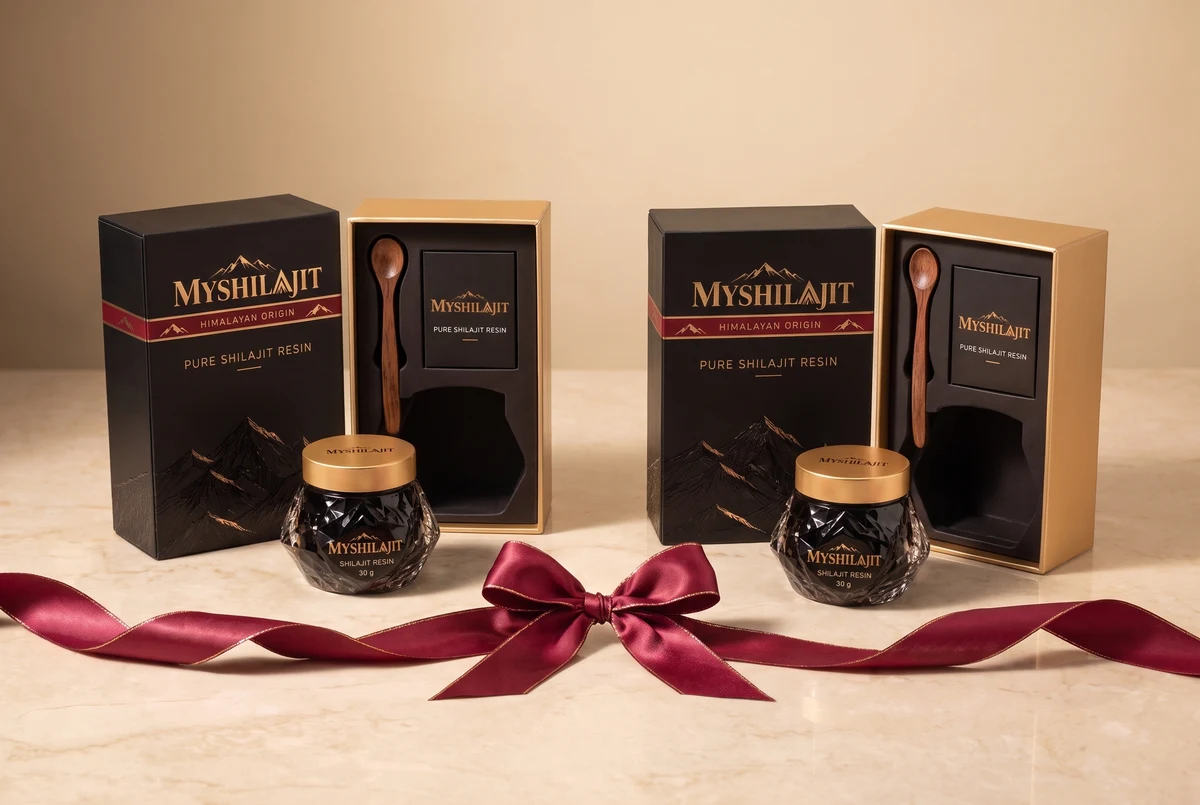
Resin, beautifully presented.
In stock
10 g or 30 g jar
From £24 GBP
View productUnearthed for the Exceptional.
Inspired by the Himalayas.Resin, gummies, capsules and more.
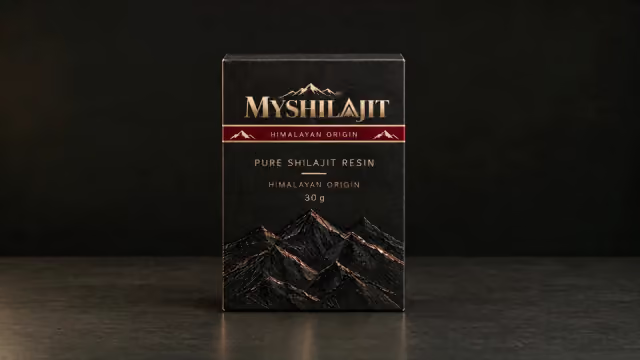
Four individual formats, or all four in the Signature Bundle.
Explore the collectionResin, beautifully presented.
In stock
10 g or 30 g jar
From £24 GBP
View product
Shilajit in a chewable form.
In stock
60 gummies15 g shilajit content
£30 GBP
View product
Shilajit in capsules.
In stock
60 capsules30 g shilajit content
£60 GBP
View product
Your quantity. Ready to travel.
In stock
10–120 sachets5–60 g resin · choose your quantity
From £12.50 GBP
View product
All four formats. One collection.
In stock
Resin + gummies + capsules + 30 sachets90 g shilajit content
£183.90 GBP
View product
THE MY SHILAJIT MEMBERSHIP
Three deliveries or one year, paid upfront. Choose your delivery interval.
Auto-renewal on by default · switch off anytimeTRACE THE BEGINNING
Himalayan
inspiration

Modern
standards

01 / 04BENEATH THE SURFACE
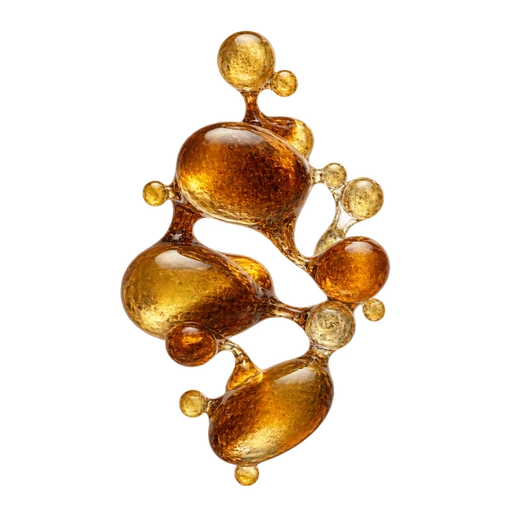
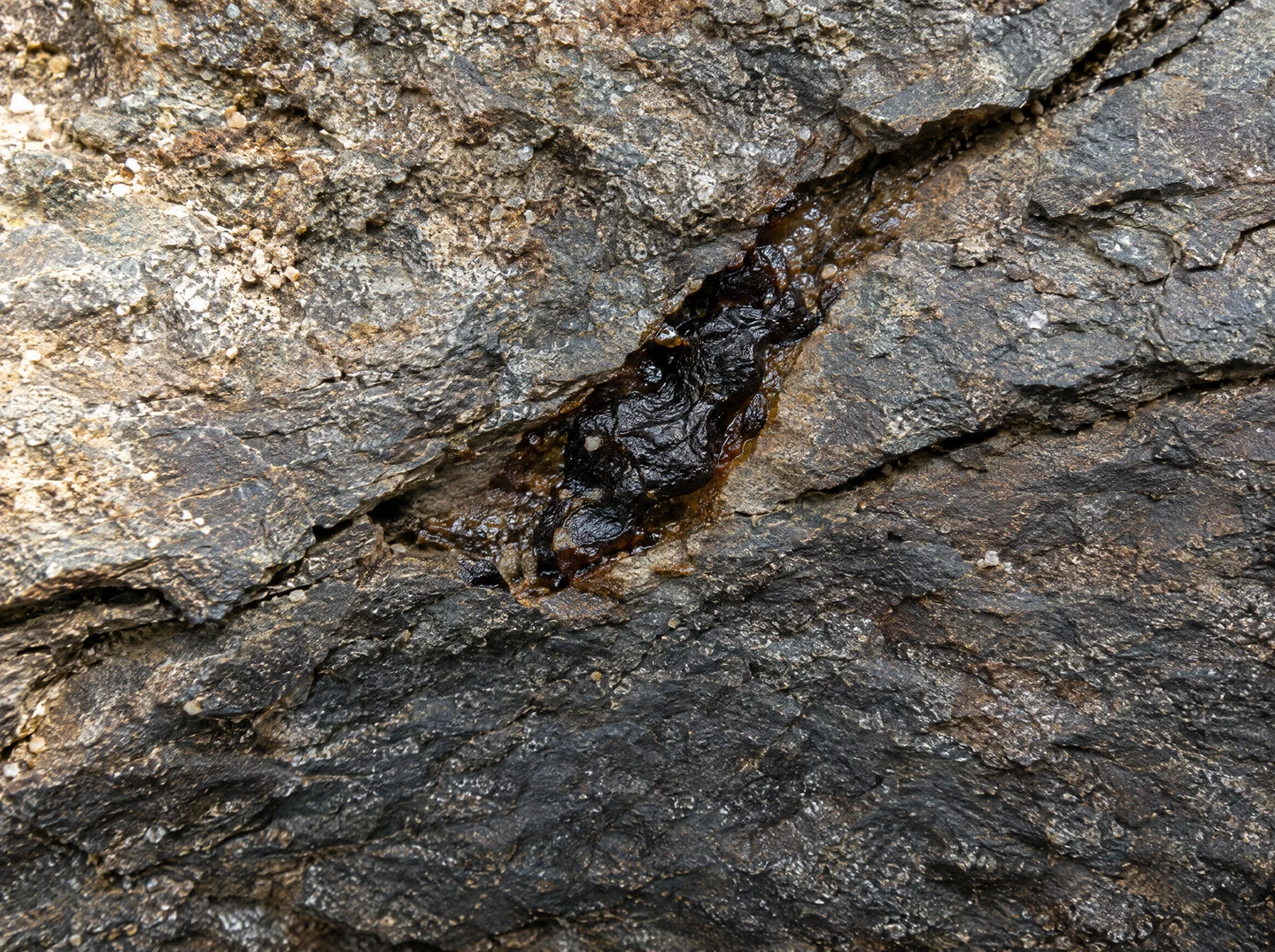
Preparation begins with the raw material found in mountain rock.
A closer look inside the rock.

02 / 04WATER PREPARATION
Water dissolves the soluble portion of the raw material, creating a liquid extract. Rock particles and other insoluble matter remain to be separated.
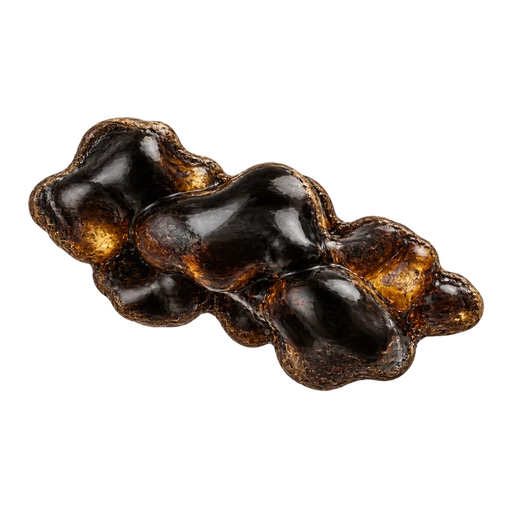
The resin takes shape through preparation.

03 / 04SEPARATION & FILTRATION
Separation and filtration remove suspended particles from the liquid extract. Testing is a separate step: appearance alone cannot establish quality.
Filtration prepares the extract. Testing examines it.

04 / 04CONCENTRATION
As water is reduced, the liquid extract thickens into resin. Its deep colour and dense texture are the visible result of this concentration step.
Next, look beyond the texture to the laboratory results.
A little further
Explore the supplied laboratory report and the pathway from a sample to a traceable jar.
The nature of our resin

Read the measured values and test methods for the reported sample.
Explore the composition results and how the laboratory measured them.
Resin in a jar, with a wooden spoon.
A supplier-submitted resin sample analysed by Eurofins Analytical Services India. Read the complete report.
A closer look at shilajit
Fulvic and humic compounds. Naturally occurring minerals. A resin studied for strength retention and antioxidant activity.
Small, water-soluble compounds with a natural affinity for minerals. Fulvic acids can form complexes with mineral ions—a distinctive part of shilajit’s chemistry. Researchers also investigate their antioxidant and immune-related activity in laboratory studies.
Larger organic compounds formed as plant matter transforms over time. Their many binding sites interact with minerals, helping give shilajit its complex organic–mineral character. Their biological activity is an area of ongoing research.
Calcium, magnesium, potassium, iron, zinc and copper have been identified in shilajit. Their amounts vary by source.
The role of minerals
From releasing energy to moving a muscle, minerals help the body do extraordinary things every day. Here is what six minerals identified in shilajit do in human nutrition; the contribution of a resin serving depends on its measured mineral content.
Energy & movement
Helps the body release energy from food and supports normal muscle and nerve function. It also plays a role in protein production and bone health.
Oxygen where it matters
Needed to make haemoglobin, which carries oxygen around the body, and myoglobin, which supplies oxygen to muscles.
Immunity & repair
Supports normal immune function and wound healing. Your body also uses zinc to make DNA and proteins, and for your sense of taste.
Muscles & nerves
An essential electrolyte involved in nerve signalling and muscle contraction. It helps cells function and supports normal heart and kidney function.
Structure & strength
Builds and maintains bones and teeth. Beyond that familiar role, calcium helps muscles move and nerves carry messages throughout the body.
Energy & connective tissue
Helps the body make energy, maintain connective tissue and use iron. Copper also supports the nervous and immune systems.
Benefits explored in human research
Fulvic acid · human trial
In an early trial involving 30 men with allergies, oral carbohydrate-derived fulvic acid reduced the skin’s wheal response to an allergen challenge compared with placebo. A promising signal for research into inflammatory responses, using a manufactured fulvic preparation rather than shilajit resin.
Humic acid · human pilot study
A 45-day study in 14 healthy volunteers found increased concentrations of several resident gut-bacterial groups after a humic-acid preparation. It shows that humic acids can interact with the microbial community; the uncontrolled study did not establish a digestive-health benefit.
Fulvic acid · topical human trial
In a four-week trial of 36 people with eczema, a carbohydrate-derived fulvic-acid cream improved the clinician’s overall assessment more than the comparison emollient. This finding concerns a topical formulation, not the effects of consuming shilajit.
Whole shilajit extract · human trial
An eight-week trial found better strength retention after exercise in a subgroup of men taking purified shilajit.
Whole shilajit extract · human trial
A 48-week trial in postmenopausal women with osteopenia found improvements in markers of oxidative stress.
Further findings from laboratory & animal research
Fulvic-rich fractions · laboratory
Researchers isolated fractions from shilajit and measured their interaction with human complement, a group of immune-system proteins. Acidic fractions showed dose-dependent complement-fixing activity. This helps explain the interest in immune modulation, without demonstrating improved immunity in people.
Fulvic acid · laboratory
In laboratory experiments, fulvic acid inhibited the formation of tau fibrils and helped break down existing fibrils. These molecular findings make protein aggregation an interesting research direction; they do not demonstrate better memory or prevention of dementia.
Humic acids · animal study
In mice with experimentally induced colitis, humic acids increased tight-junction protein expression, altered gut bacteria and reduced inflammatory signalling through the TLR4–NF-κB pathway. These findings suggest mechanisms worth investigating in human gut-health trials.
Strength study: 63 recreationally active men received placebo or 250 or 500 mg/day of PrimaVie shilajit for eight weeks. The stronger half of participants taking 500 mg had less decline in maximal strength after a fatiguing task than placebo. This was a subgroup finding.
Oxidative-stress study: 60 postmenopausal women with osteopenia received placebo or 250 or 500 mg/day of a standardised shilajit extract for 48 weeks. Supplemented groups showed lower malondialdehyde and higher glutathione, alongside reduced bone loss.
The strength and oxidative-stress trials studied whole extracts, not isolated fulvic acid, humic acid or individual minerals. Mineral presence does not establish a nutritionally significant amount per serving. The illustrations above are conceptual, not molecular structures.
Acid-specific human studies: the oral fulvic study used a seven-day placebo-controlled crossover challenge with carbohydrate-derived fulvic acid. The topical study used 3.5% carbohydrate-derived fulvic acid twice daily for four weeks. The humic-acid microbiome pilot used Activomin for 45 days without a placebo group. These are different preparations and routes of administration; their findings cannot be treated as interchangeable.
Mechanism studies: complement fixation and tau fibril experiments were performed in vitro. The intestinal-barrier study used a chemically induced mouse model. Such studies explain biological possibilities, rather than establish clinical benefits from a serving of resin.
06 / SCIENCE & TRANSPARENCY
Read the results for a supplier’s resin sample.
See what was tested and what the numbers mean.
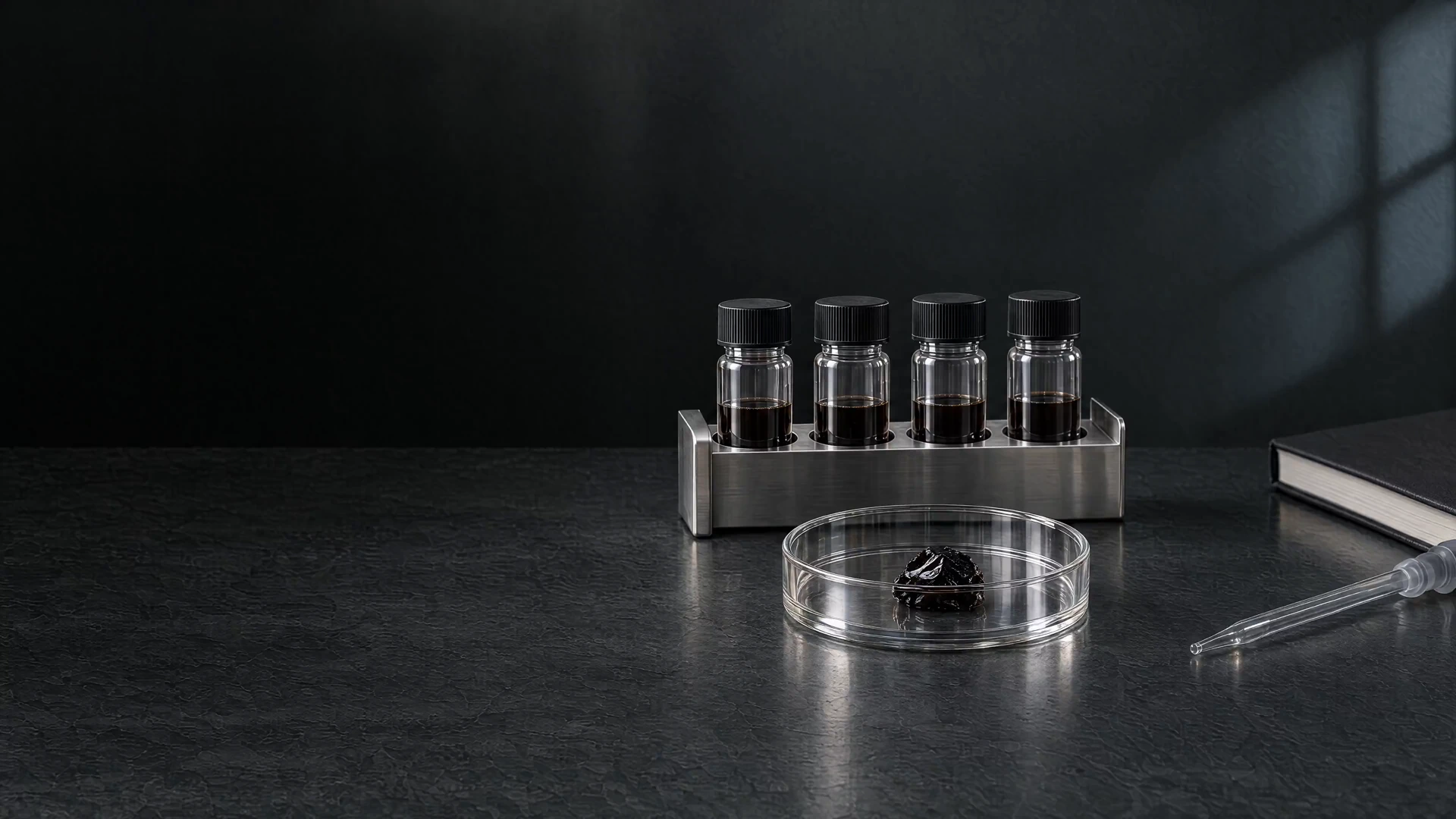
SUPPLIER-SUBMITTED SAMPLE
Report AR-258-2026-00092862-01 · parts 01 & 02
Original PDF · no results omitted
A NUMBER IS ONLY THE BEGINNING
The supplied report records 12 measurements for one resin sample. We show the results alongside what they can—and cannot—tell you.
The supplied document names Eurofins as the analytical laboratory. It explicitly states “not sampled by Eurofins”. Independent analysis and independent sampling are different steps; direct report authentication remains outstanding.
That connection is not established yet. The supplier’s stated bulk batch is 1,000 kg; the analysed sample was 200 g. Supply, packing and jar-batch records must link your jar to the tested material.
The four elements and four microbial tests appear in the accredited section. Total plate count, moisture and both fulvic-acid assays appear in the non-accredited section. No laboratory logo is used as a product approval.
A contaminant report does not prove geographical origin. Himalayan sourcing needs separate collection, supplier and traceability records. Those records are not established by this sample report.
REVEAL. SCAN. DISCOVER.
Beneath the gold, your jar has a signature. Reveal the concealed QR and scan to check its unique code.
Check my code Find the code beneath your cap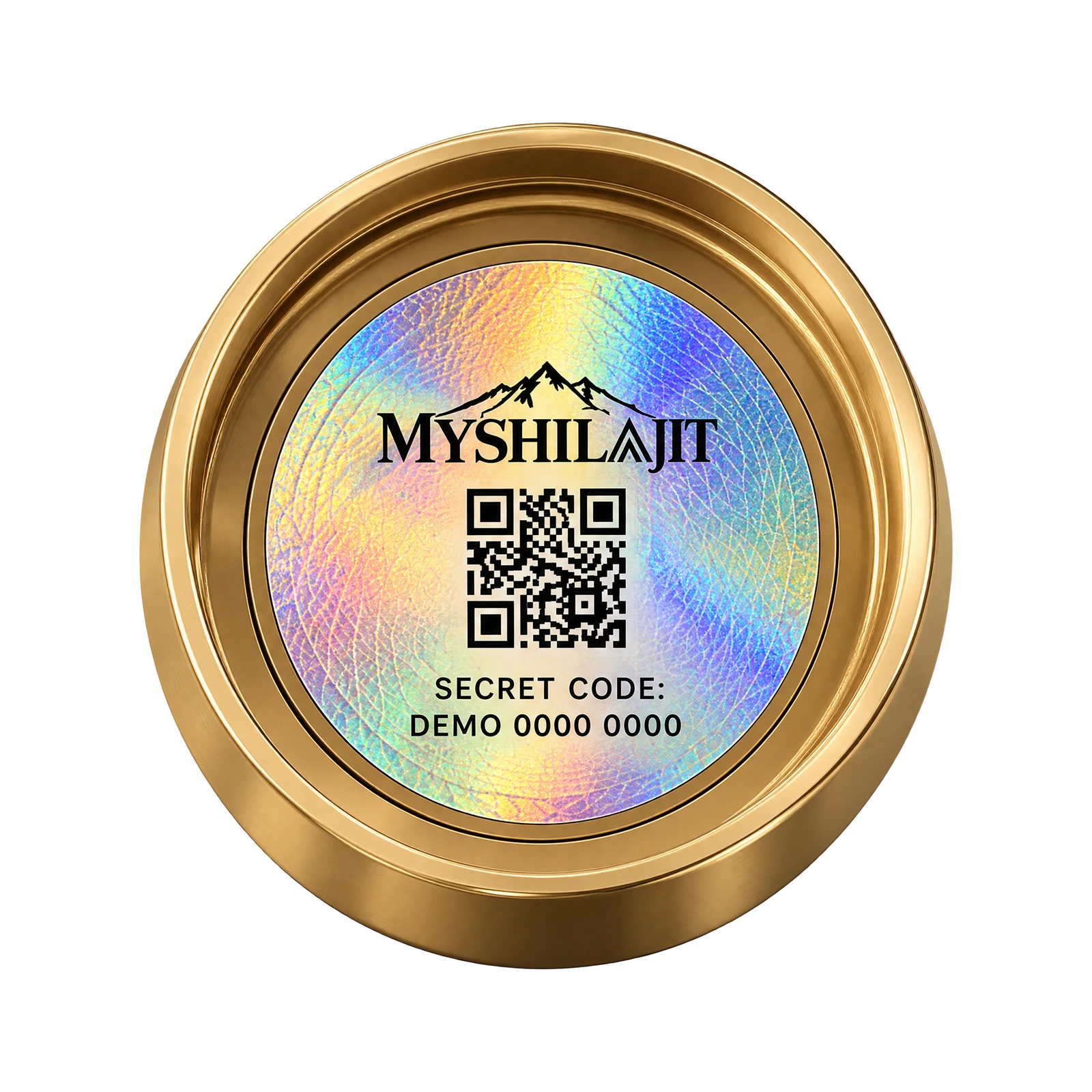
Find the concealed label.
Your code checks automatically.
Save to your collection, if you wish.
| What matters | Our standard | Compare withOther brandsCheck each brand |
|---|---|---|
| Independent lab testing | Eurofins India | Lab & location |
| Heavy-metal testing | Published | Test results |
| Microbiology testing | Published | Test results |
| Pure Himalayan resin | To confirm | Ingredients & origin |
| Sourcing at 16,000 ft | To confirm | Source records |
| UV-protected glass | To confirm | Packaging details |
| Traditional sun-drying | To confirm | Process records |
| Returns & refund support | See policy | Return terms |
| Full lab reports | Open access | Report access |
| Unique hologram code | Verifiable | Unique code |
| Personal jar record | Save to account | Batch traceability |
| Wooden spoon & card | Included | Box contents |
Our choice of glass
We choose violet glass for its light filtering and resistance to oxygen and moisture transmission.
Explore the resin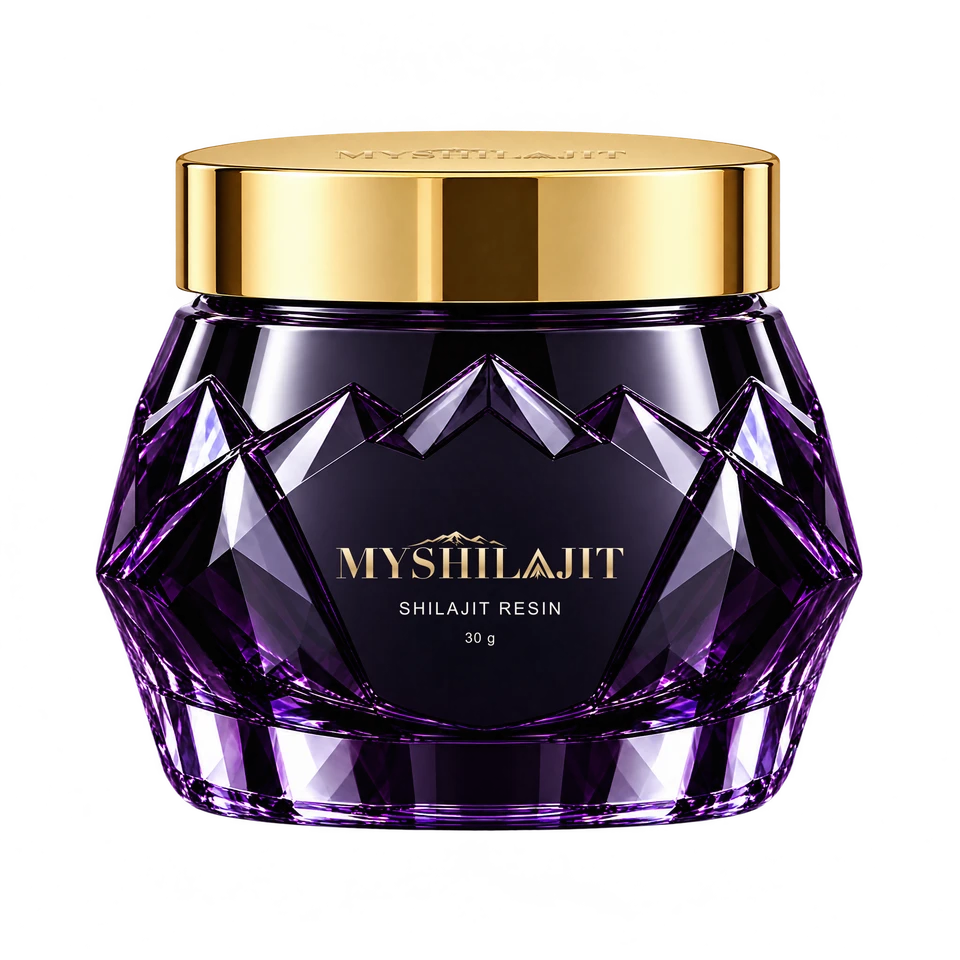
Violet glass reduces transmission across much of the visible spectrum. Less exposure helps protect light-sensitive compounds from photodegradation: chemical change triggered by light.
Non-porous glass walls resist oxygen and water-vapour transmission. Together with a well-sealed lid and careful storage, this helps limit environmental exposure between servings.
A sculpted glass base and gold cap, designed for reuse.
Selective spectral transmission describes how a material admits some wavelengths while reducing others. MIRON’s published violet-glass information describes transmission of some ultraviolet A (UVA), violet and near-infrared light, alongside reduced transmission across much of the visible spectrum. This is selective filtering, not complete UV protection.
Light can initiate photodegradation and, in the presence of oxygen, photo-oxidation in susceptible ingredients. Published bottle-colour research illustrates why packaging and storage conditions matter. These material references explain our packaging choice; they do not establish a longer shelf life or measured potency retention for our shilajit. The finished jar’s performance depends on its glass specification, closure and storage conditions.
Keep closed. Store away from direct sunlight.
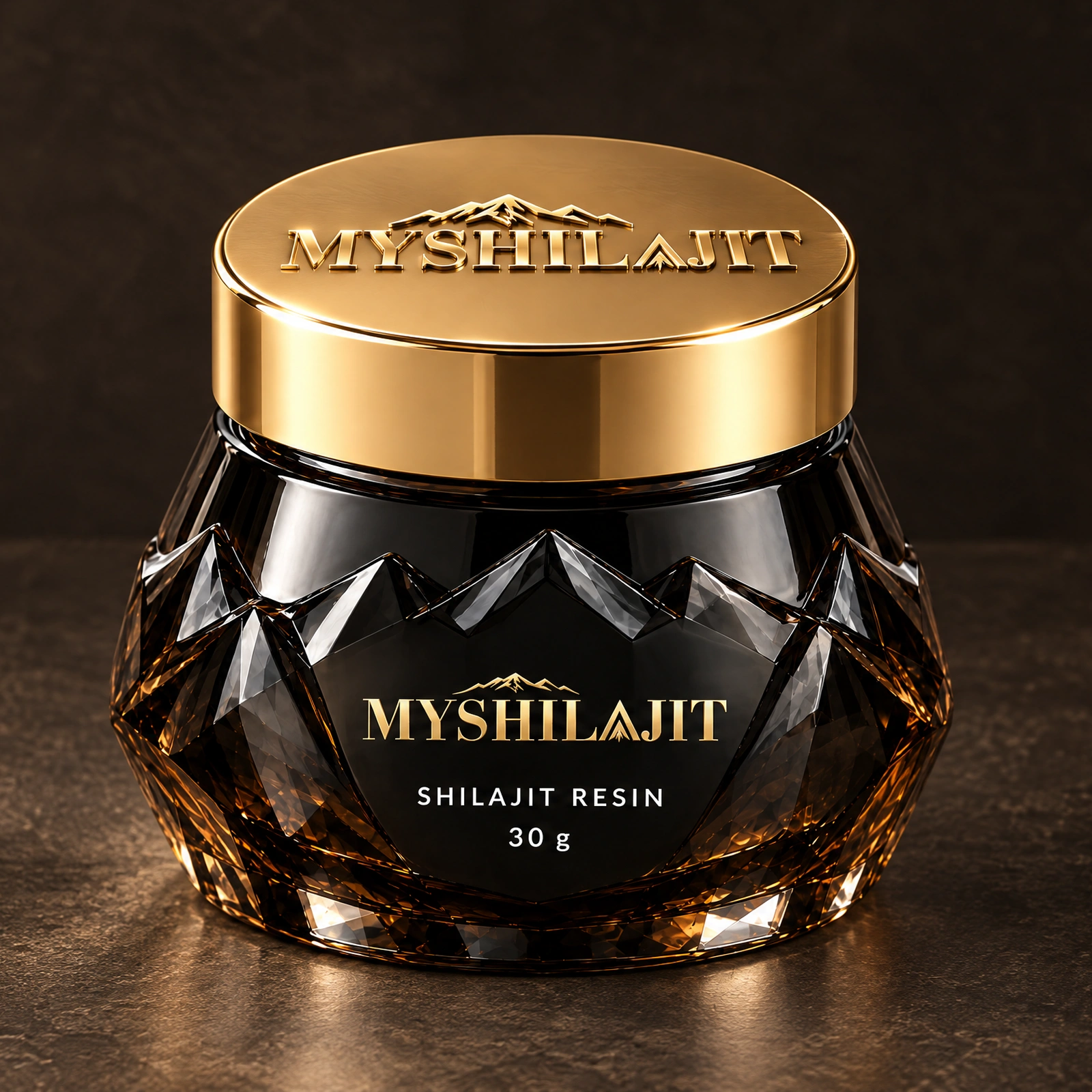
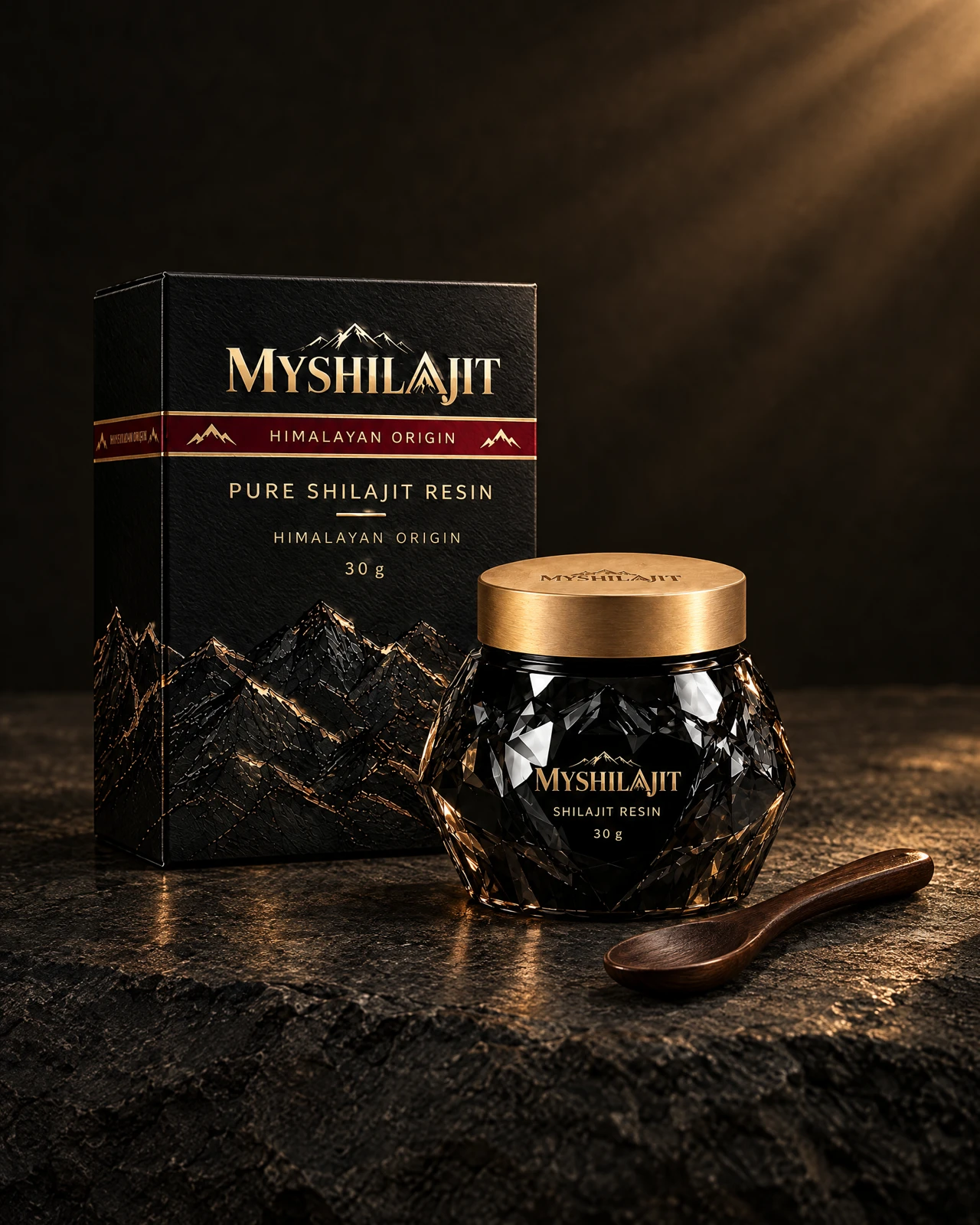
Faceted black jar, gold lettering and a warm gold cap.
Black. Warm gold. Deep burgundy.
Included with the resin: presentation box, wooden spoon and instruction card.
An iridescent packaging detail.
Verify your secret codeCOMPARE PRODUCTS
Resin comes in a jar; gummies are chewable; capsules have a shell. Compare the ingredients and the amount of shilajit on each label before choosing.
Compare resin, gummies and capsulesMY SHILAJIT / WAYS TO TAKE IT
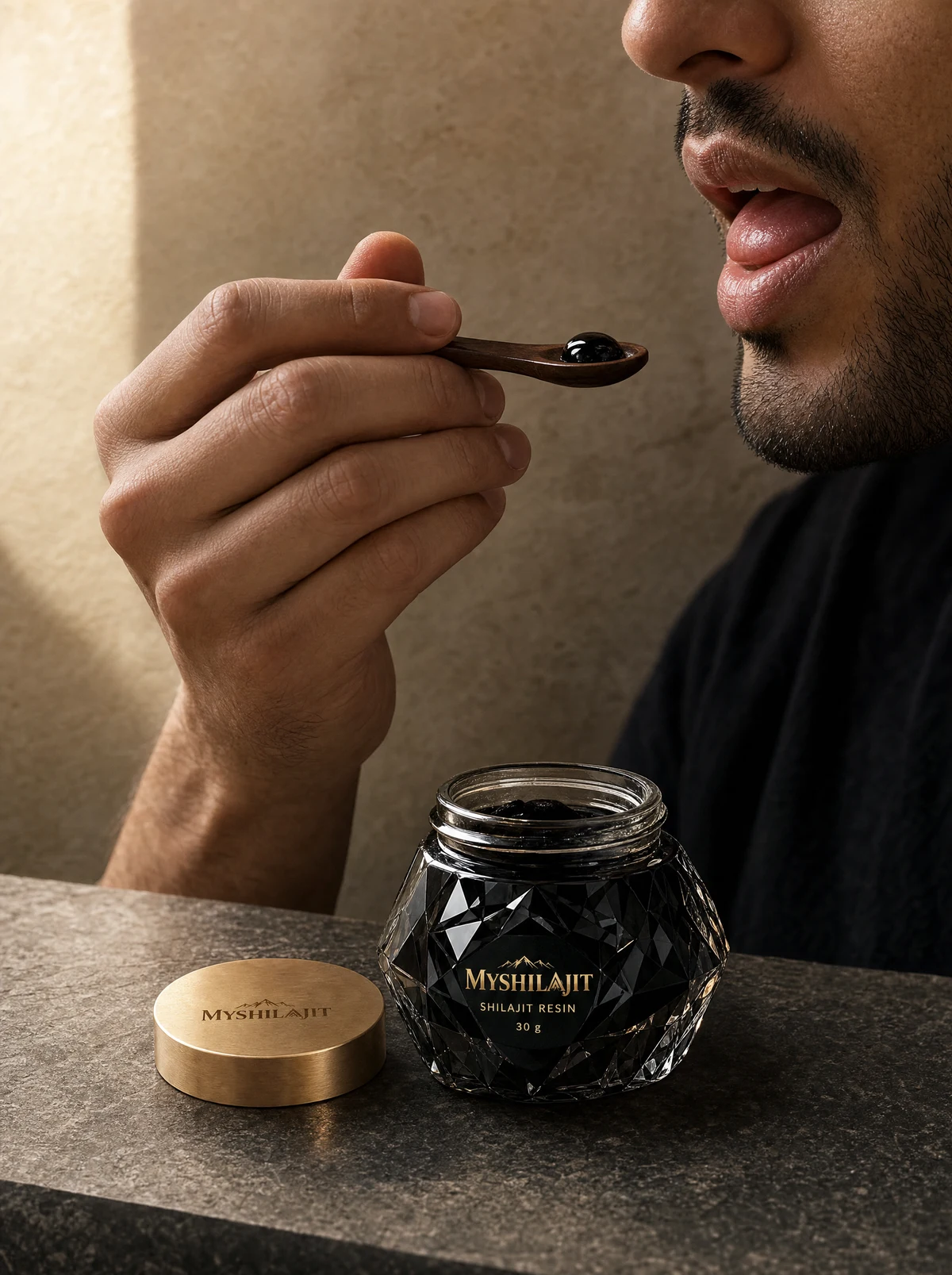
01 / Direct use
No cup. Just the resin’s rich, earthy taste.
Use the wooden spoon to lift the amount shown on the instruction card in your box.
Follow the instruction card’s directions for under-the-tongue use.
Wash and dry the spoon, then close the lid firmly.
Human studies of swallowed shilajit capsules do not establish faster absorption or greater benefit from under-the-tongue use. These studies do not establish a holding time; use the method described on the instruction card in your box.
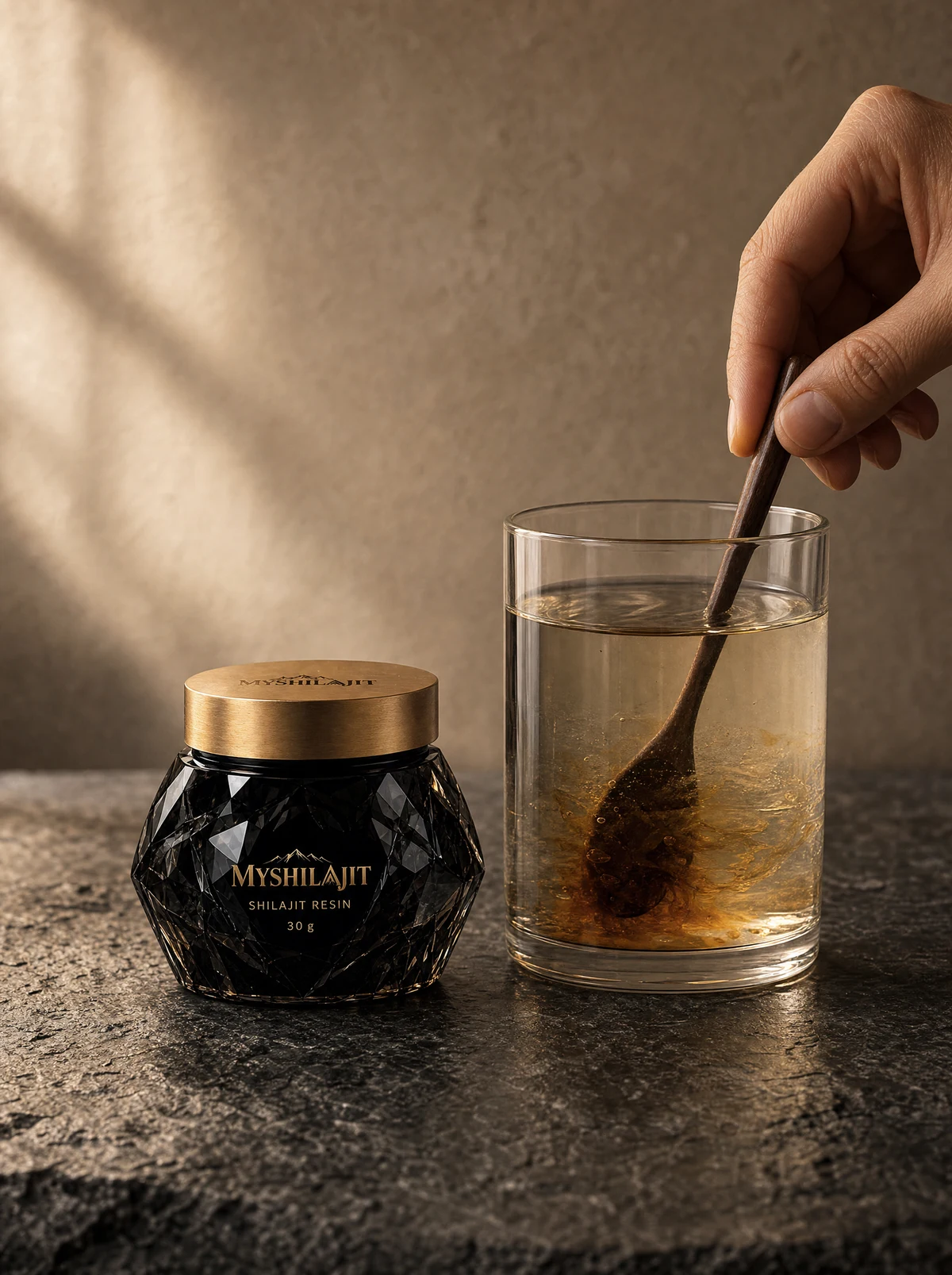
02 / Warm water
Dissolve in warm water.
Use the wooden spoon to measure the amount shown on your instruction card.
Stir the resin into warm water until it has dissolved.
Sip your drink. Wash and dry the spoon before putting it away.
Your box includes an instruction card with serving and preparation details. The studies below used capsules and did not compare drinks or establish better absorption with warm water.
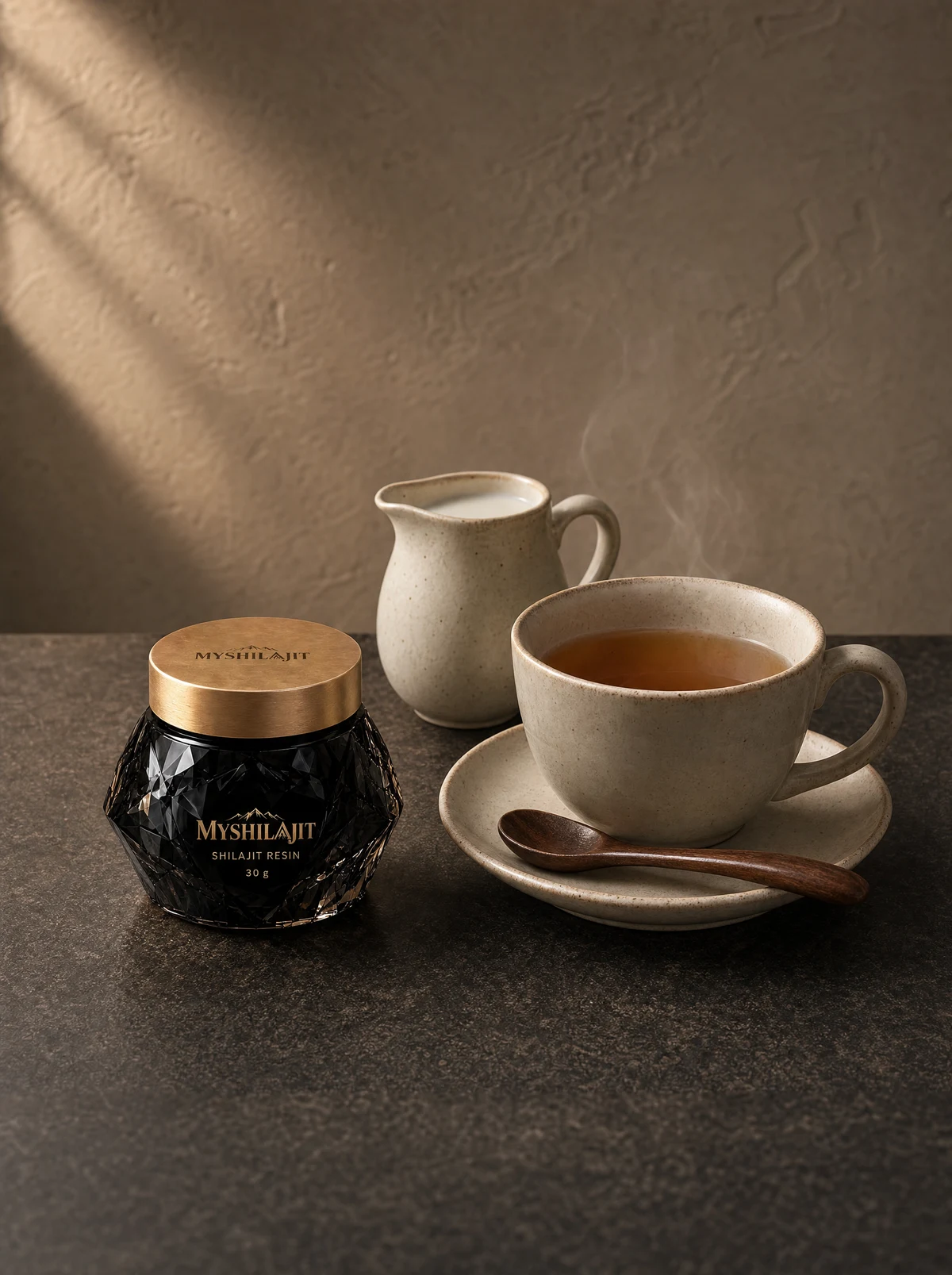
03 / Tea or milk
Mix into warm tea or milk.
Pour a cup of tea or milk and let it cool until comfortably warm.
Use the wooden spoon to add the amount on your instruction card. Stir until dissolved.
Enjoy your drink, then wash and dry the spoon.
Use the serving and preparation details on the instruction card in your box. The capsule studies below did not compare tea, milk and water or show that one drink makes shilajit more effective.

THE GOLDEN TICKET · MY SHILAJIT REWARDS
Earn points on purchases and exchange them for credit or a resin jar.
Points become available 30 days after confirmed payment. Verify your account email to connect your purchases. Exchanging points reduces your balance. £10 credit requires a future £40+ product order and shares the £10-per-order cap with referral credit. Free products do not earn points; refunds and disputes reverse purchase points. Complimentary jars are subject to stock. No subscription required. Full reward details.
REFER A FRIEND
Earn credit after your friend’s first qualifying order.
Future order credit · terms below.
Both credits release 30 days after the first paid order with £40 or more of products, after discounts and credit, if it has not been cancelled, refunded or charged back. One reward per new customer; no self-referrals or recruitment chains. Up to £10 credit per future order of £40 or more. Credits are not cash. Referral links are saved for 30 days in your browser and attached to your account when you sign in. You can also paste the code or link at checkout. Guests must verify their payment email in an account to use their credit.
THE READING ROOM
What is shilajit? Learn about its fulvic acids and minerals, and how raw material, purified ingredients and finished resin products differ.
Explore shilajit benefits research on testosterone, exercise and bone density. See what human studies measured, who took part and where the evidence stops.
How to measure and mix shilajit, choose a drink and assess morning, evening or empty-stomach advice. Start with the directions on your exact product.
My Shilajit Resin · The everyday ritual
Read the lab report and testing methods.
Explore shilajit testing How shilajit is preparedOpen the product page for the current price, pack options and availability. Your bag and checkout show the details of the selection you are ordering.
Yes. The testing page shows the results and methods for a supplier-submitted resin sample. The report covers that sample; it is not a certificate for every finished product.
A contaminant report describes the tested sample; it does not establish geographical origin. Collection, supplier and packing records are needed to connect an origin claim to a finished batch. Our testing page explains the scope of the evidence currently shown.
Water extraction, filtration and concentration can turn raw material into resin. The process page explains each step.
Check the information for the exact format and pack. Resin, gummies and capsules have different formulations. If the complete ingredients or shell details are not shown, ask Customer care before choosing; a product image does not establish vegan or allergen suitability.
Nature’s Black Gold.